
What is Spey anyway?
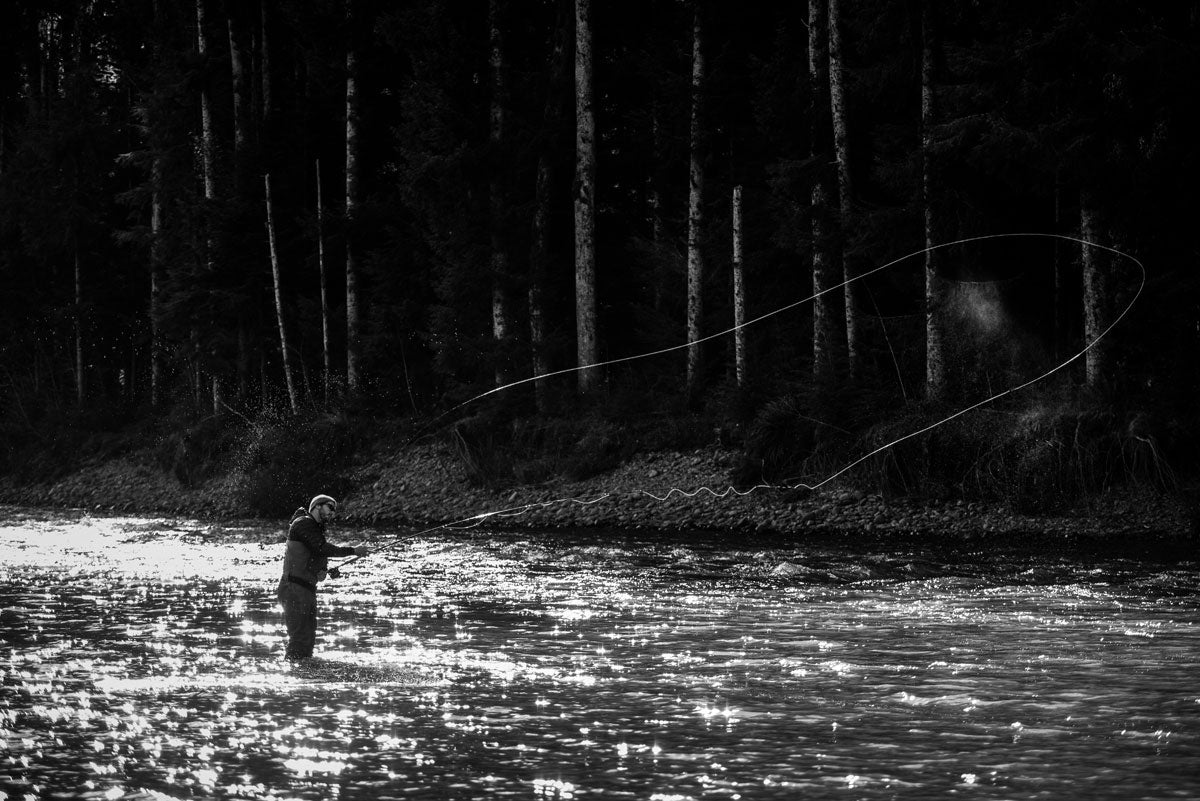
Spey is a specialized form of fly casting. A Spey cast is any waterborne cast performed with either a two handed rod, and these days, even single handed rods.
The Spey cast can be performed with virtually any line/rod combo, but specifically designed Spey lines will perform much better.
Where in a conventional, or overhead fly cast the rod is loaded by the weight of the fly line fully extending between forward and back casts; Spey casting removes the need for back cast room by using an "anchor" which is the point where the front of your line makes contact with the water. This anchor allows you to form a D-Loop just like in a roll cast, but with much more horsepower.
Basically a spey cast is a roll cast on steroids, but the motions used to set the anchor, and to initiate load in the rod are very unique to Spey casting.

Why is it called Spey?
The name "spey cast" comes from the river Spey in Scotland, where this style of casting was popularized due to the river's large width and difficult river bed footing. Anglers were mostly unable to wade out into the river, so the ability to make a long cast with minimal space for a back cast was crucial to their success.
When Spey Casting was developed in the 1800s it was a skill taught as a traditional sport exclusively for gentlemen and the privileged.
Good news is today it doesn’t matter where you come from or your social status. You can be living in a van as a steelhead bum and be on water with a quality spey outfit for less than $600.

More about Spey
Spey Rods
Spey Rods
Spey rods have come a reeaally long way even since the last decade. These days spey rods are more like high power precision sniper rifles. These rods are designed in lengths of 10ft to 15 ft. This long length gives the caster leverage so you can make further casts, handle longer fly lines with minimal effort. The added length gives you better line control over the water, like mending and line control during the swing.
The longer the rod, the easier it is to make longer casts. As a rule of thumb, you gain about 15 feet of cast for every foot of rod. So if you're casting 70 feet with a 12' rod, a 13' rod will get 85 feet with about the same effort.
Spey Rod:12.5 ft – 15ft (in the past rods have been in excess of 18ft, which is not very practical for most rivers, and not necessary given the advances in rod and line technology nowadays)
- We use spey rods 6wt to 10wt @ 11 to 14 feet for all sizes of salmon and steelhead.
Switch Rod: 10ft – 12ft. They originally called them switch rods under the premise that you can "switch" between single hand casting and two handed casting. A switch rod is really just a baby spey rod. Great for fishing in tight quarters with lots of overhanging trees(like we have here), and they also much lighter so your arms don't get as tired as they would with a 14 foot rod.
Trout Spey: 1WT - 5WT rods, 10 - 13ft. In recent years most rod companies have started releasing more and more "Trout Spey" rods which are just Spey rods in lighter line weights which is AWESOME.
These rods allow you to fish all kinds of new water that would be much more challenging with a single hand rod. They're great for much more than just trout too. Beating up on smallmouth bass with a 3wt Trout Spey, a skagit head, and a sculpzilla is some of the most fun you can have with pants on.
Types of Spey Lines
Types of Spey Lines
This is where people's heads start to spin, and we get it. The world of spey lines can feel like you need a PhD just to buy a fly line. The good news? It's actually pretty simple once someone explains it without all the jargon.
Here's the quick breakdown:
Skagit Lines
Skagit lines are the workhorses of the Pacific Northwest. Short, heavy, and built to muscle big flies and heavy sink tips through the water. If you're fishing for steelhead and salmon on big brawly rivers — this is almost certainly where you're starting.
The Skagit system is a head + running line + sink tip setup. The head is short (typically 15–25 feet), which makes it incredibly easy to load the rod even in tight quarters. Slap on a T-8 or T-14 tip, tie on a big intruder, and go to work.
Skagit is forgiving. It's the easiest spey system to learn, and honestly it's just flat out effective. There's a reason it was born right here in the Pacific Northwest — it was purpose-built for our rivers and our fish.
Scandi Lines
Scandi (Scandinavian) lines are the elegant cousin of the Skagit. Longer, lighter, and built for delicacy. Where a Skagit system is a sledgehammer, a Scandi is a scalpel.
Scandi lines are longer headed (typically 35–50 feet) and designed to turn over smaller, lighter flies with a much softer presentation. Think smaller wets, marabou spiders, Dee-style flies. They load the rod differently — more of a sustained anchor style of casting — and they reward good technique.
If you're fishing summer steelhead on lower, clearer water, or Atlantic salmon, or you just want to feel like you're actually casting rather than lobbing, Scandi is worth exploring.
Shooting Heads
Shooting heads are interchangeable line heads attached to thin running line. The whole point is versatility — swap heads to change your depth, your presentation, or your casting distance without re-rigging your whole setup.
The Skagit and Scandi systems above are both technically shooting head systems, but "shooting heads" as a category also includes mid-length heads that bridge the gap between the two — a little more punch than Scandi, a little more finesse than Skagit.
This is also where your single-hand rod gets to play. Compact shooting heads like the OPST Commando Smooth turn your 5wt or 6wt into a spey machine. Genuinely one of the most fun things you can do on a trout stream.
Sink Tips
Sink tips are the depth-control knob of the spey system. Attach them between your head and your leader to get your fly down into the water column where the fish are holding.
They're rated by grains per foot — the higher the number, the faster they sink. T-8 sinks slower, T-14 sinks fast, T-17 and T-20 will get you to the bottom in a hurry. Most steelhead and salmon fishing calls for somewhere in the T-11 to T-14 range depending on water speed and depth.
Having a few different tips in your pack is like having a tackle box — you match the tip to the water, not the other way around.
Running Lines
Running line is the thin, slick shooting line your head is attached to. It's what allows you to shoot distance — when you fire that forward cast, the running line slides through your guides and adds the extra yards.
Running lines come in monofilament, coated, and textured varieties. Mono is slick and shoots far but can be a coiled mess in cold weather. Coated lines are easier to handle. Textured lines grip your fingers better when stripping. Which you prefer is honestly personal — try a few and you'll figure out what works for you pretty quick.
Not Sure What You Need?
That's what we're here for. Call us, email us, or stop in. We've been rigging spey setups for 25+ years and we can put together the right system for your rod, your water, and how you like to fish.
Where can you use Spey?
Where can you use Spey?
In short: you can Spey cast pretty much anywhere you fly fish, but it truly shines when you repeatedly need to make long casts and/or have limited room for an overhead cast fly cast.
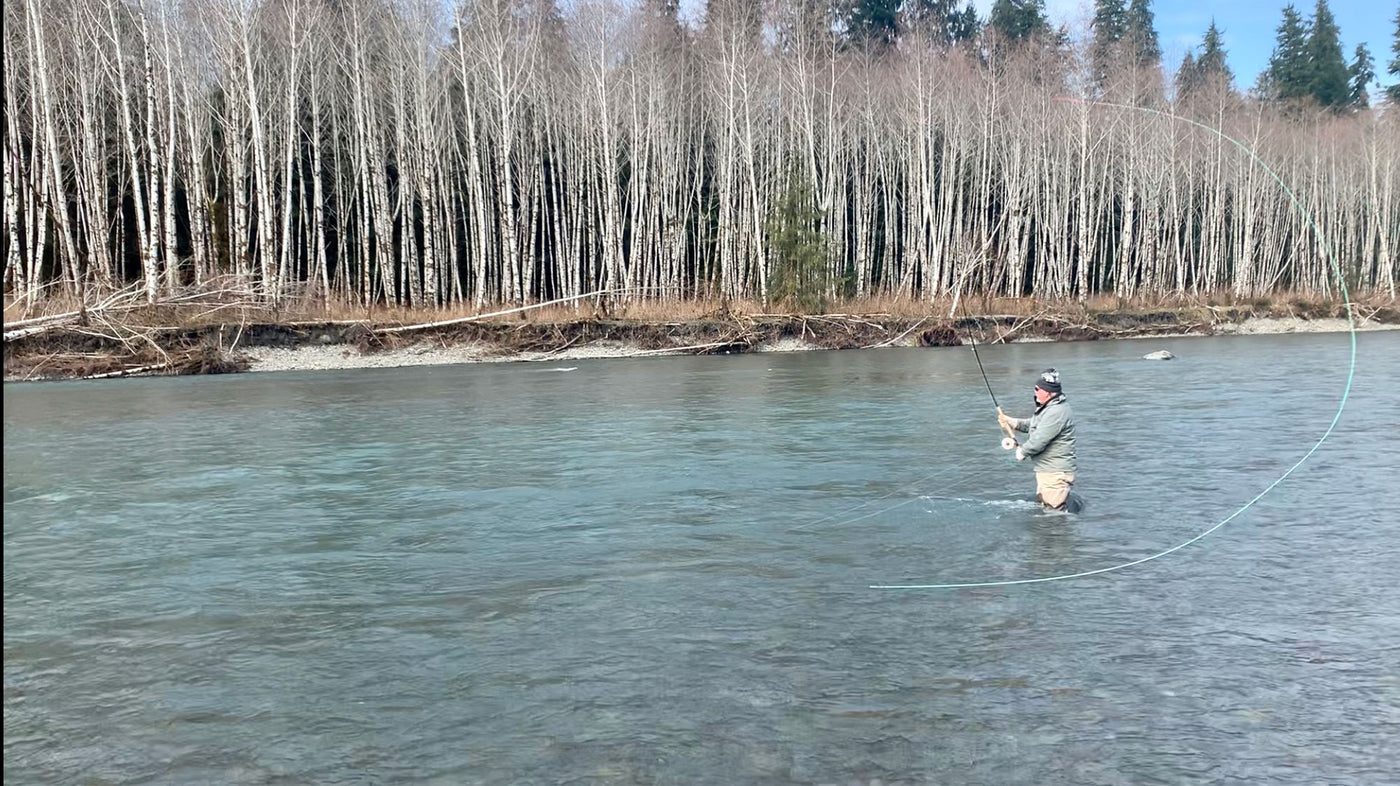
Rivers and Streams — Where it all began. Salmon, Steelhead, trout on big western rivers. Anywhere you're swinging a fly through moving water, spey is in its element. The ability to cover water efficiently — cast, step, cast, step — is what makes it so effective for fish spread across a long run. And on the brushy, tree-lined streams we have here on the Peninsula, being able to cast with minimal backcast room isn't just convenient, it's necessary.
The Beach — Salt water sea-run cutthroat fishing along the Strait and the Sound is one of our favorite applications. You're making long casts repeatedly over the course of a morning, covering hundreds of yards of beach. That's a lot of double-hauling on a single-hand rod. With spey you just... cast. Effortlessly. Cover more water, catch more fish, and your shoulder still works at the end of the day. A few of our senior customers have shifted to spey almost exclusively for beach fishing.
Lakes — Yes, people spey fish lakes. Casting along weed edges, into structure, from the bank or a pontoon. It looks unconventional until you watch someone cover three times the water of the guy next to them with a single-hand rod and no room for a backcast behind him.
Small Tight Water — This surprises people. A switch rod or compact shooting head lets you fish overgrown, brushy creeks that would be a nightmare with a traditional overhead cast. The spey cast doesn't care what's behind you.
Everything Else — Bass, smallmouth, pike, saltwater. If you can fly fish it, someone has already figured out how to spey fish it and they're having more fun than everyone else on the water. Beating up smallmouth on a 3wt trout spey with a skagit head and a sculpzilla is legitimately one of the best days you can have with a fly rod.
Some people enjoy the casting itself so much that they'll do it in barren concrete ponds!
While Spey casting is best suited to a river's flowing water. You can apply these techniques to pretty much any fly fishing situation. We know folks that Spey fish lakes, and even the ocean.
These days we have short compact spey lines for single handed rods. Check out The OPST Commando Smooth.
You can now fish a shooting head Spey line on your single hand rod from a 3wt on up to 12wt. These compact spey lines are effective and very fun to fish.
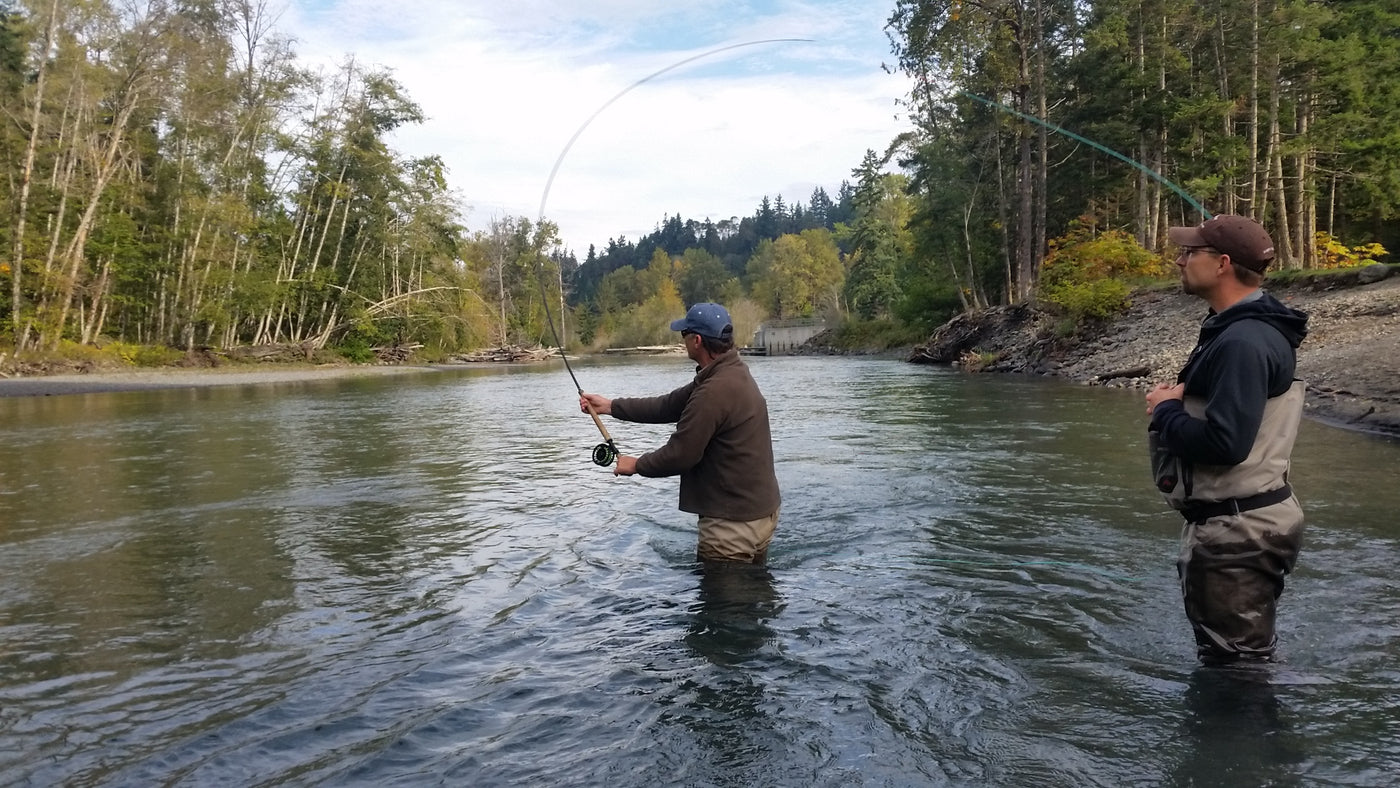
Having an instructor, who not only knows how to cast, but has a developed systematic method for teaching spey will boost your skills and confidence tenfold.
We’ve been doing these classes for over a decade now have a sleeve full of differing approaches to suit a wide range of learning styles.